
Examples of Blogs: 9 Platforms That Dominate 2026
Discover the top 9 blogging platforms dominating 2025 with real examples of blogs that drive success and engagement.

The blogging landscape has transformed dramatically over the past decade. What started as simple personal journals has evolved into a sophisticated ecosystem of platforms, tools, and business models that power everything from independent creators to multinational content marketing operations. If you're looking to understand what modern blogs actually look like—their structure, their platforms, their purpose—you've come to the right place.
The statistics paint a compelling picture of blogging's relevance today. According to Wix Blog, there are over 600 million blogs worldwide in 2025, representing approximately 31.6% of all websites. This isn't a dying medium; it's the backbone of digital content strategy for businesses across virtually every industry. And yet, most creators still struggle to understand which platform fits their specific needs, how to structure their content for maximum reach, and how to actually grow an audience in an increasingly crowded space.
That's where real examples matter. By examining the best-in-class blogging platforms and how different creators are using them, you'll gain practical insights into where your own blogging journey should begin.
Quick Answer:
The best blogging platforms vary by creator type: WordPress.org dominates professional blogs and B2B content (61.1% of B2B blogs use it), Medium leads the community publishing space, Substack powers newsletter creators, and Tumblr holds 72.27% of the overall blogging market share. According to Bloggers Passion, 77% of internet users (4.08 billion people) read blogs, with 6 million blog posts published daily worldwide, making blogging one of the most effective channels for reaching audiences at scale.
Key Takeaways:
WordPress dominates B2B: 61.1% of professional blogs run on WordPress for maximum customization and SEO control
Content length matters: The average blog post is 1,333 words and takes approximately 3.5 hours to produce
AI is reshaping creation: 80% of bloggers now use AI tools, up from just 5% in 2023
How-to content wins: 74% of bloggers create how-to articles as their primary content format
Table of Contents
Platform Comparison Table
Before diving into individual examples, here's how these platforms stack up across critical dimensions:
| Platform | Best For | Customization | Pricing | SEO Strength | Learning Curve |
|---|---|---|---|---|---|
| WordPress.org | Professional blogs, B2B content | Unlimited | Free (hosting separate) | Excellent | Moderate |
| Medium | Community storytelling, writers | Low | Free/Paid | Good | Very Easy |
| Substack | Newsletter creators, subscribers | Low | Free/Paid | Good | Very Easy |
| Wix | Small business blogs | Moderate | $11-27/month | Moderate | Easy |
| Squarespace | Visual creatives, portfolios | High | $15-33/month | Good | Moderate |
| Ghost | Membership & membership | Moderate | $25-199/month | Excellent | Moderate |
| HubSpot | Inbound marketing, lead gen | High | Free/Paid | Excellent | Moderate |
| Blogger | Hobby bloggers, beginners | Low | Free | Moderate | Very Easy |
| Tumblr | Community blogs, micro-content | Moderate | Free/Paid | Moderate | Easy |
The selection of platform matters more than most creators realize. According to Blogging Wizard, 61.1% of B2B blogs use WordPress as their content management system, a dominance driven by WordPress's unmatched flexibility and SEO capabilities. Yet this same flexibility makes WordPress overwhelming for creators who simply want to write and publish without technical configuration.
1. WordPress.org — Best for Professional Bloggers & B2B Content
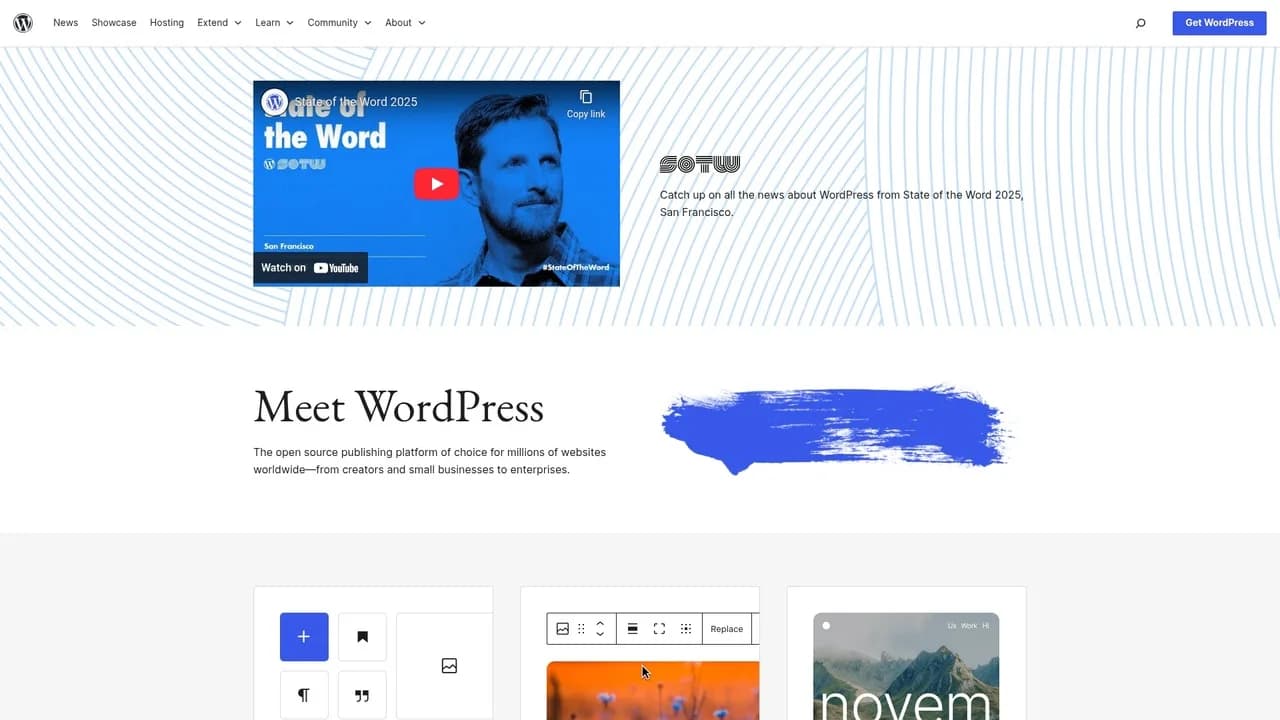 WordPress.org dashboard and editor interface
WordPress remains the industry standard for customizable, SEO-optimized blogging
WordPress.org dashboard and editor interface
WordPress remains the industry standard for customizable, SEO-optimized blogging
WordPress.org stands as the undisputed king of blogging platforms, powering over 40% of all websites globally. The distinction is critical: we're discussing WordPress.org (self-hosted), not WordPress.com. This self-hosted version offers unlimited customization, ownership of your data, and complete control over monetization.
The reason WordPress dominates B2B blogging is straightforward. The platform offers unmatched SEO capabilities through plugins like Yoast SEO and Rank Math, allowing creators to optimize every aspect of their content strategy. You control your site architecture, internal linking, metadata, and technical performance—all crucial factors for ranking highly on Google. Businesses treating blogging as a core traffic acquisition channel almost universally choose WordPress.
However, this power comes with responsibility. WordPress requires hosting (typically $5-15/month through providers like Bluehost or SiteGround), domain registration, regular updates, and ongoing security maintenance. The learning curve isn't severe, but it's present. Non-technical creators often need to hire developers to implement custom designs or functionality.
Pros:
Maximum customization and SEO control
Massive plugin ecosystem (over 58,000 plugins available)
Complete data ownership and no platform restrictions
Exceptional for long-term organic growth strategy
Superior technical SEO capabilities
Cons:
Requires separate hosting and domain purchase
Ongoing maintenance and security updates needed
Steeper learning curve than drag-and-drop builders
Plugin conflicts can cause performance issues
Requires more technical knowledge for optimization
Best for: B2B companies, established media outlets, professional writers, and creators who want maximum control over SEO strategy and monetization.
2. Medium — Best for Community-Driven Writers
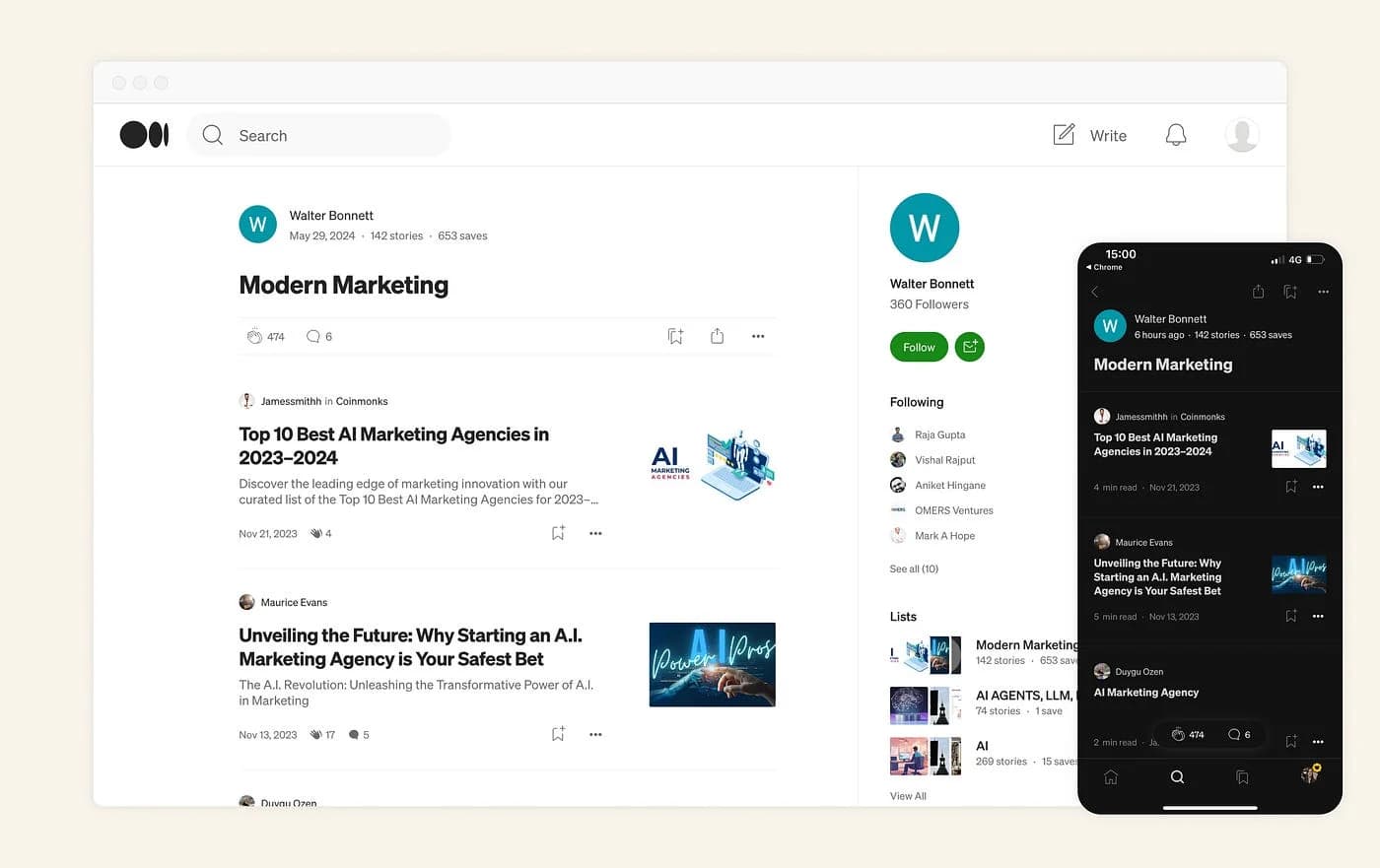 Medium represents a fundamentally different blogging philosophy than WordPress. Rather than building an isolated blog on your own domain, Medium operates as a collaborative platform where millions of writers publish alongside each other. The platform's algorithm surfaces articles based on engagement signals—claps, comments, reading time—rather than SEO optimization.
This approach creates genuine advantages for writers seeking audience discovery. A well-written Medium article can reach hundreds of thousands of readers through the platform's recommendation engine, something nearly impossible to achieve on a standalone blog without significant promotional effort. Medium's clean, distraction-free interface appeals to readers, and the platform handles all technical aspects of publishing.
The community aspect is real but sometimes overstated. While Medium offers publication features allowing multiple writers to collaborate under one brand, the platform strongly prioritizes individual writer monetization through its Member program (where readers pay $5/month for unlimited access). This creates interesting dynamics: writing excellent content can generate passive income, but you're building an asset within Medium's ecosystem rather than owning your platform.
Pros:
Massive built-in audience and discovery potential
Zero technical setup required
Passive income through Medium's Partner Program
Professional, distraction-free reading experience
Strong community engagement and feedback
Cons:
Limited customization and branding control
Content locked within Medium's platform
Algorithm-dependent for reach (no SEO control)
Limited monetization compared to owned platforms
Less suitable for B2B or commercial marketing
Best for: Individual writers, thought leaders, essayists, and creators prioritizing audience discovery over brand control.
3. Substack — Best for Newsletter Creators & Subscriber Growth
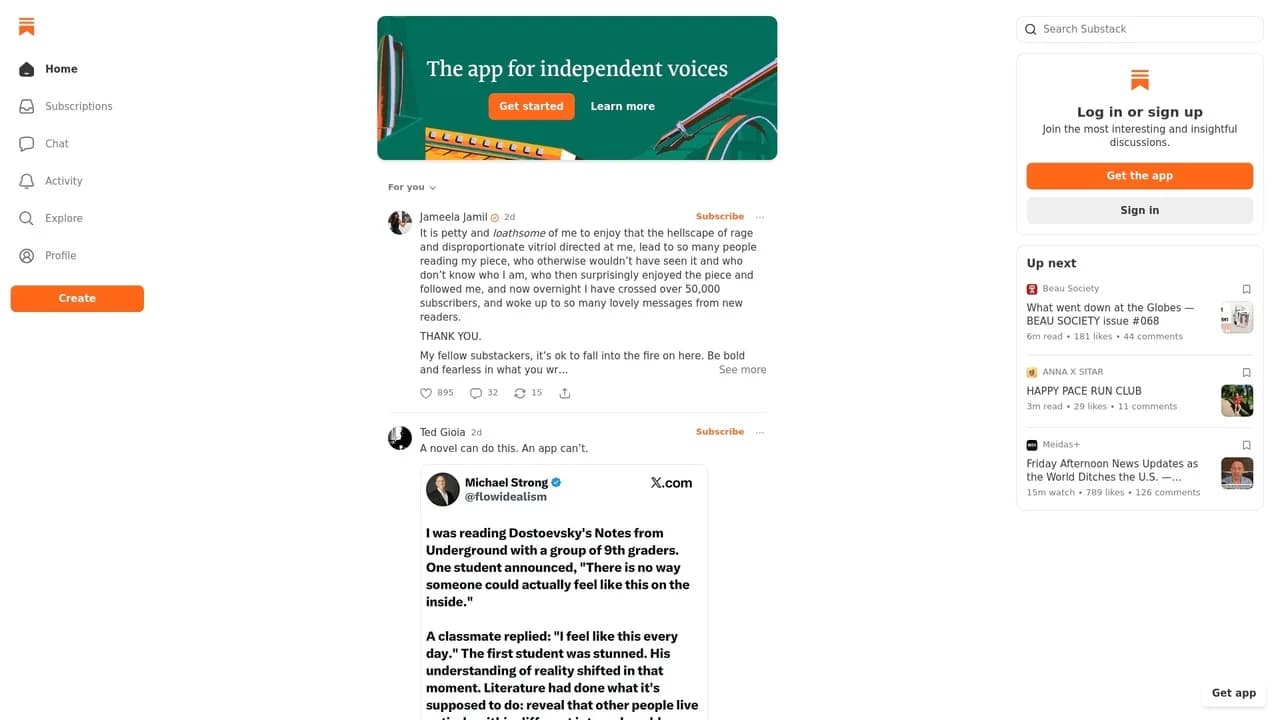 Substack publication creation interface
Substack enables creators to build direct subscriber relationships through email-based publishing
Substack publication creation interface
Substack enables creators to build direct subscriber relationships through email-based publishing
Substack transformed the blogging landscape by making email the distribution channel rather than treating it as an afterthought. Creators publish articles directly to Substack, where readers receive them via email subscription, with optional web archive pages. The platform has become the de facto standard for independent writers, journalists, and content creators building direct subscriber relationships.
The power of Substack lies in its simplicity and subscriber economics. Unlike blogs reliant on social media algorithms or search engine traffic, Substack creators control direct communication with their audience. An email subscription list is valuable, portable, and algorithm-resistant. Substack's paid subscription feature enables creators to charge readers directly ($5-$25+ per month), creating viable income streams without advertising.
This model has attracted high-profile writers and journalists—some earning six figures annually from subscriber revenue. The platform requires minimal technical knowledge and no customization skills. However, Substack's strength in email distribution is also its limitation. If your goal is organic search traffic or maximizing social reach, Substack is insufficient. The platform also takes 10% of paid subscription revenue, a non-trivial cost for growing creators.
Pros:
Simple, distraction-free publishing experience
Direct subscriber relationship and email list ownership
Native paid subscription functionality
Growing creator network and discovery features
No hosting or technical maintenance required
Cons:
Limited SEO and organic search visibility
Platform-dependent monetization (10% revenue cut)
Minimal customization options for branding
Email delivery challenges with some email providers
Less suitable for multimedia or highly visual content
Best for: Newsletter creators, independent journalists, thought leaders, and writers prioritizing subscriber relationships over search engine traffic.
4. Wix — Best for Small Business Blogs with Visual Identity
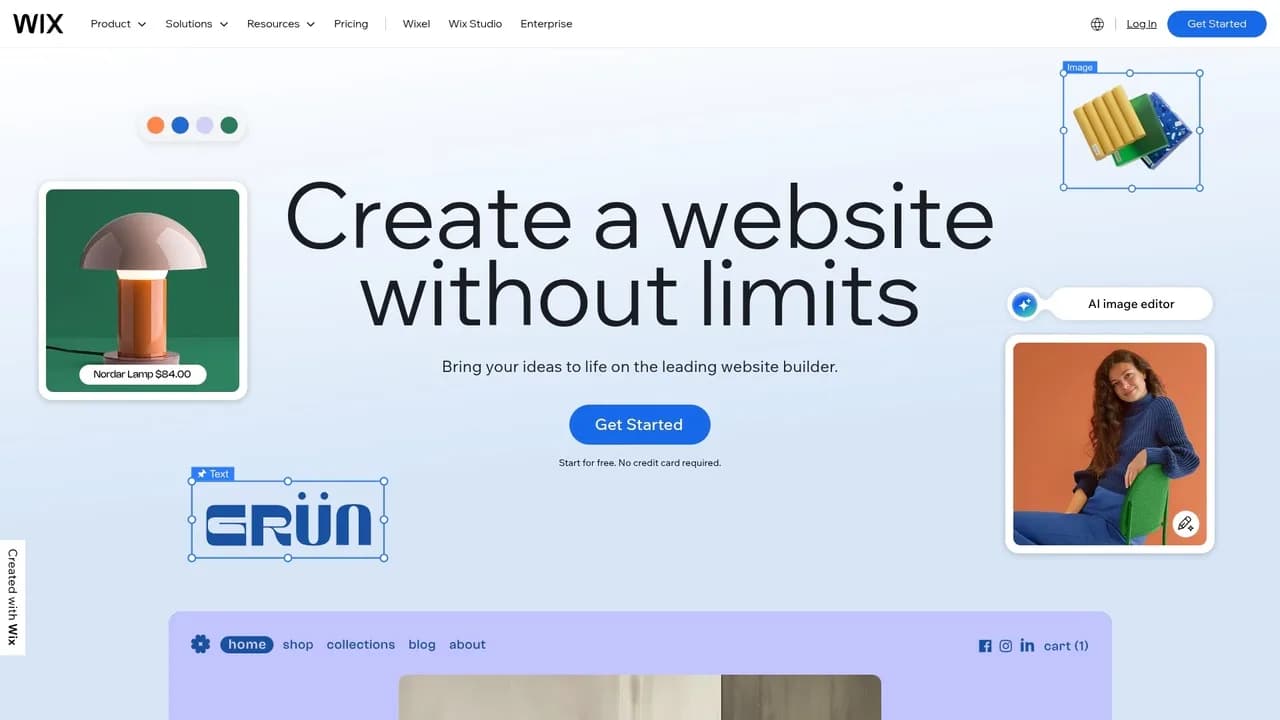 Wix website builder with blog creation tools
Wix combines blogging with visual website design through its intuitive drag-and-drop interface
Wix website builder with blog creation tools
Wix combines blogging with visual website design through its intuitive drag-and-drop interface
Wix occupies an interesting middle ground: it's primarily a website builder with integrated blogging capabilities, rather than a pure blogging platform. For small businesses needing an online presence that includes both a professional website and regular blog content, Wix simplifies the process by handling both functions within one platform.
The appeal of Wix is entirely about ease of use. The drag-and-drop interface allows non-technical creators to build visually appealing websites without writing code. The blog functionality, while less powerful than WordPress or Ghost, integrates seamlessly with the broader website. For a local plumber, consultant, or small agency wanting to publish occasional blog content while maintaining a professional web presence, Wix is practical and efficient.
However, Wix's ease comes with trade-offs. The platform offers limited SEO customization compared to WordPress, and the design flexibility, while substantial, doesn't match fully customizable platforms. Pricing starts at around $11-27 monthly for hosting and blogging features, which is higher than WordPress's hosting-only costs but includes the website builder in the same package.
Pros:
Integrated website builder and blogging platform
Drag-and-drop simplicity for non-technical users
Professional templates and design flexibility
Built-in email marketing and social sharing tools
Good basic SEO features for small business blogs
Cons:
Limited advanced customization and plugin ecosystem
Template-locked design elements (difficult to customize deeply)
Higher pricing than standalone WordPress hosting
SEO less powerful than dedicated blogging platforms
Limited scalability for complex content strategies
Best for: Small businesses, service providers, and local shops needing an integrated website and blog presence without technical complexity.
5. Squarespace — Best for Visual Creatives and Design-Focused Blogs
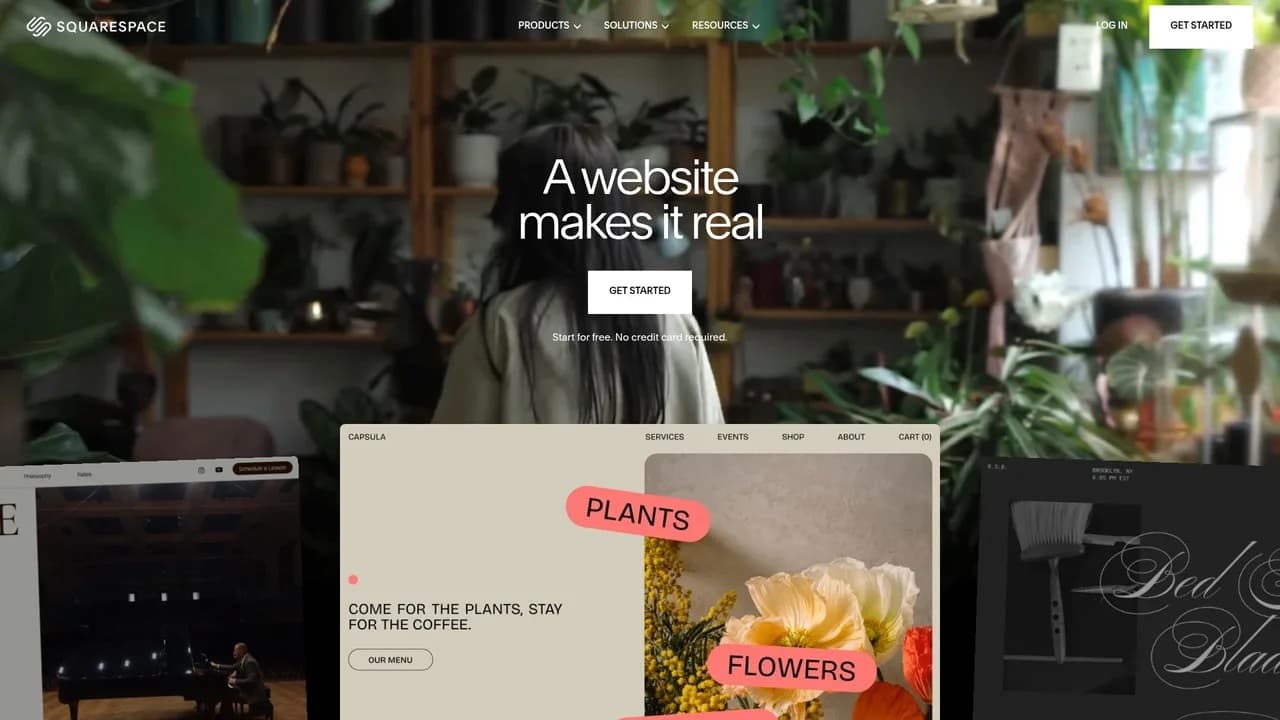 Squarespace blog with premium design template
Squarespace excels at transforming blogs into beautiful, design-focused publications
Squarespace blog with premium design template
Squarespace excels at transforming blogs into beautiful, design-focused publications
If you prioritize visual design and aesthetic presentation above all else, Squarespace stands apart. The platform is built for visual storytelling—photographers, designers, artists, and publications that treat layout and imagery as core to their message find Squarespace's design capabilities exceptional.
Squarespace templates are genuinely stunning. The platform doesn't just provide functional designs; it emphasizes typography, whitespace, and visual hierarchy. For portfolio blogs or creative publications where the design is the content, Squarespace delivers. The platform also handles all technical aspects invisibly—hosting, security, backups, updates—so creators focus entirely on content and design refinement.
The tradeoff is customization outside Squarespace's visual design paradigm. You can't extend Squarespace with thousands of third-party plugins. You can't radically modify the underlying code. The platform operates within defined parameters, which creates consistency but also constraints. Pricing ranges from $15-33 monthly, higher than many competitors, and Squarespace's traffic-building features (SEO, email marketing) are solid but not exceptional.
Pros:
Exceptional, industry-leading design templates
Minimal customization knowledge required
Excellent visual content presentation
All hosting, security, and maintenance included
Great for visual portfolios and design-focused publications
Cons:
Premium pricing ($15-33/month) without discounts for commitment
Limited customization beyond template parameters
No plugin ecosystem or code-level modifications
Email marketing tools are basic compared to dedicated platforms
Not optimized for high-volume content strategies
Best for: Visual creatives, photographers, artists, designers, and publications where aesthetic presentation is core to the brand.
6. Ghost — Best for Professional Publishers & Membership Models
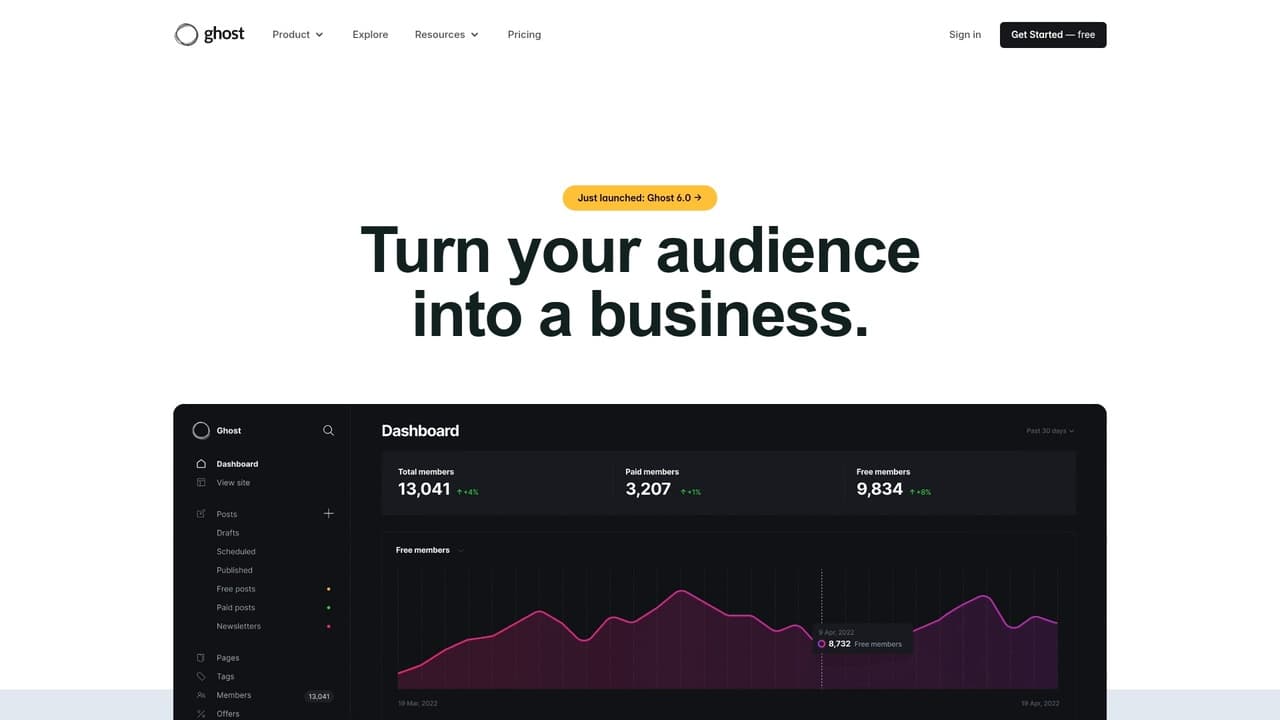 Ghost blogging platform with membership dashboard
Ghost combines professional blogging features with native membership and subscription functionality
Ghost blogging platform with membership dashboard
Ghost combines professional blogging features with native membership and subscription functionality
Ghost occupies the premium end of the blogging spectrum, designed specifically for professional publishers who need advanced features without sacrificing simplicity. The platform was built by bloggers frustrated with existing solutions, and this DNA shows throughout its design and feature set.
Ghost excels at three specific capabilities: membership management, subscription payments, and advanced email functionality. Publishers can create tiered membership levels with different content access, charge subscription fees natively within Ghost, and send sophisticated email campaigns—all without leaving the platform. For independent publishers, news operations, and creators building businesses around their content, Ghost is genuinely sophisticated.
The platform also maintains excellent editorial features for professional newsrooms: collaborative editing, scheduling workflows, multiple publication channels, and content organization tools designed for teams. The design is clean and purposeful without sacrificing power or flexibility.
Pricing is the primary consideration. Ghost starts at $25/month for hosted plans (or can be self-hosted) and scales to $199+ monthly for advanced features. This positions Ghost as a premium platform unsuitable for casual hobbyist bloggers but excellent for serious publishers. The learning curve is moderate—simpler than WordPress but more involved than Wix or Medium.
Pros:
Native membership and subscription functionality
Sophisticated email campaign tools
Professional editorial workflows and team features
Excellent SEO and performance by default
Clean, distraction-free editing experience
Growing creator economy (advanced integrations available)
Cons:
Higher pricing tier ($25-199/month) than many alternatives
Smaller ecosystem compared to WordPress
Limited third-party integrations
Learning curve steeper than drag-and-drop builders
Overkill for casual or hobbyist bloggers
Best for: Professional publishers, news operations, creators monetizing through memberships or subscriptions, and publications needing sophisticated audience management.
7. HubSpot Content Hub — Best for Inbound Marketing & Lead Generation
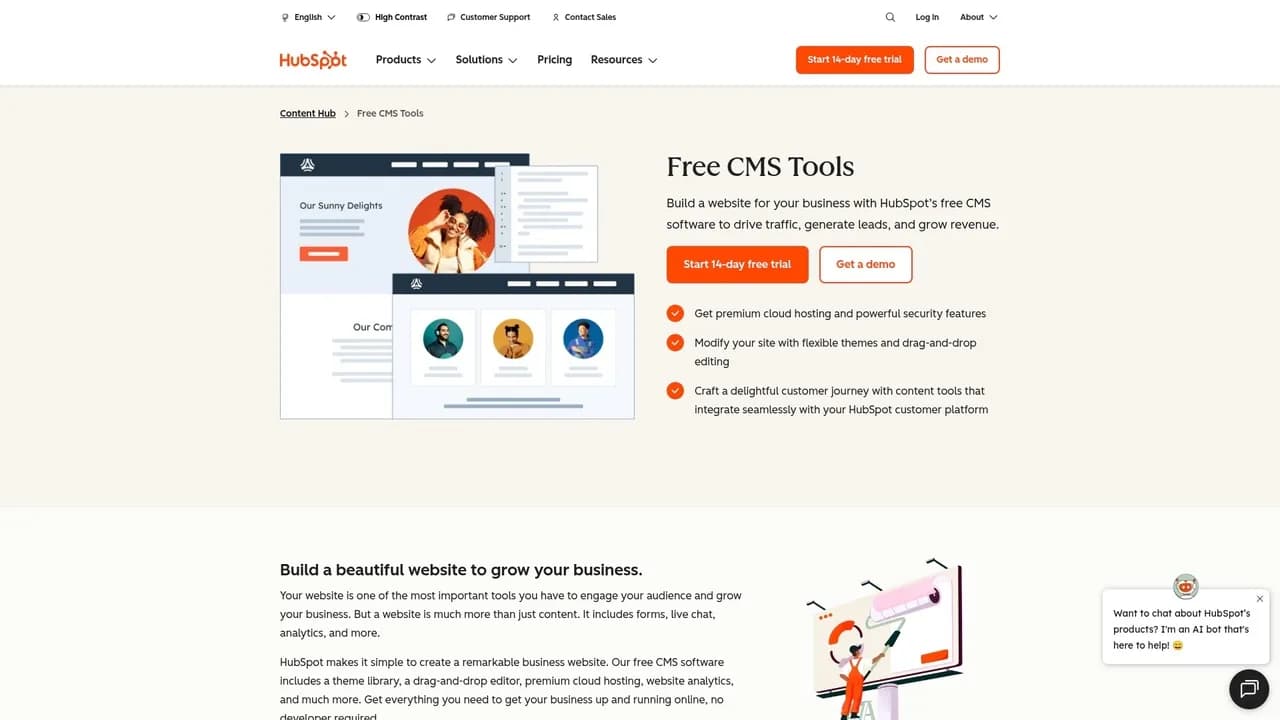 HubSpot Content Hub blogging and CMS platform
HubSpot integrates blogging directly with marketing automation and CRM systems
HubSpot Content Hub blogging and CMS platform
HubSpot integrates blogging directly with marketing automation and CRM systems
HubSpot Content Hub represents a fundamentally different approach to blogging: it's not a standalone blogging platform but rather a content management system integrated into a comprehensive marketing, sales, and service platform. For B2B companies using inbound marketing methodology, this integration transforms blogging from a standalone activity into part of a coordinated marketing strategy.
The power of HubSpot's approach is connectivity. Blog posts feed directly into lead capture systems, email nurturing workflows, and CRM data. You can create blog content, immediately see which readers filled out forms, and track those leads through sales pipelines. For B2B companies measuring content's contribution to revenue, this integrated approach is invaluable.
HubSpot also enforces content marketing best practices through its interface. The platform guides users toward SEO optimization, readable writing, and content organization through design. The free version includes blogging functionality, making it accessible for small teams. Paid tiers unlock advanced personalization, advanced analytics, and integration depth.
The limitation is scope. If your only need is blogging, HubSpot is unnecessarily complex and feature-heavy. The platform is powerful for integrated marketing workflows but not optimized for pure content creators prioritizing audience building or community engagement.
Pros:
Integrated with CRM and marketing automation systems
Lead capture and nurturing built directly into blog platform
Strong SEO guidance and best practice enforcement
Free tier available for small teams
Excellent analytics connecting blog content to business results
Native form building and website personalization
Cons:
Complexity overkill for casual bloggers
Pricing escalates quickly for advanced features
Learning curve steep for users unfamiliar with inbound marketing
Feature bloat if your only need is publishing
Better suited for B2B than B2C or creator content
Best for: B2B companies, inbound marketers, and businesses needing to connect blog content directly to lead generation and sales outcomes.
8. Blogger — Best for Beginner Hobbyist Bloggers
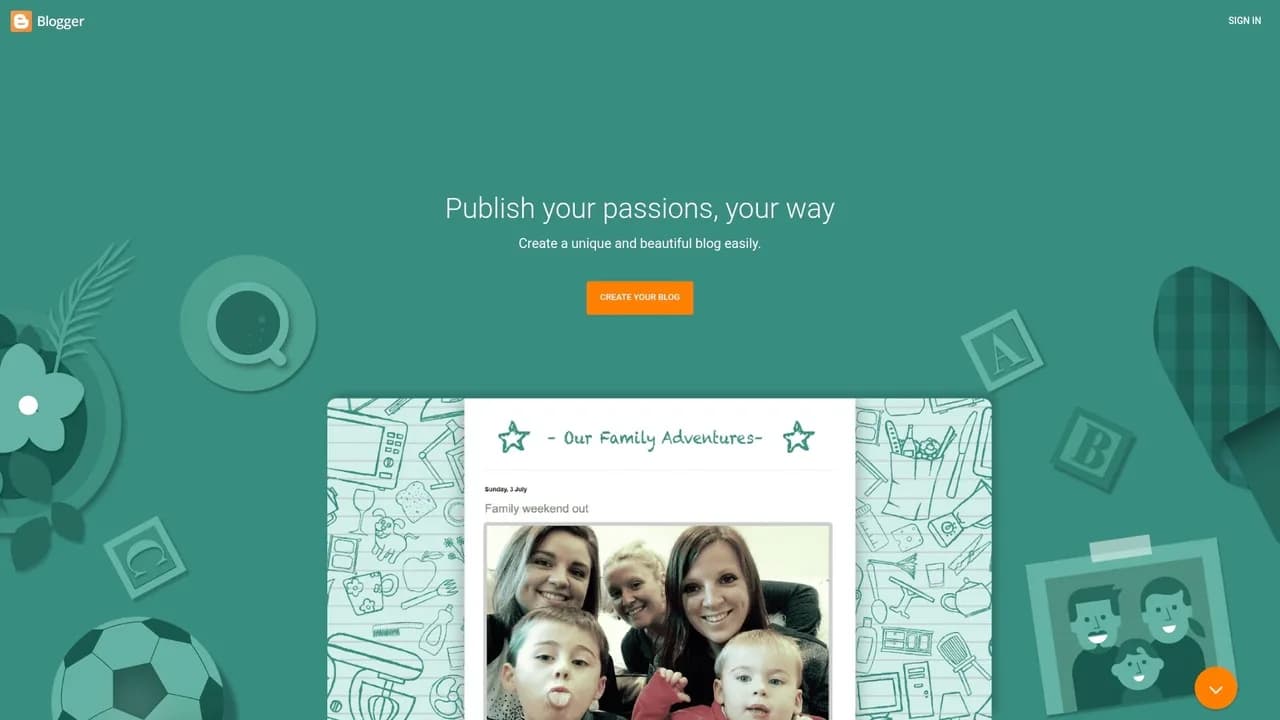 Blogger.com blog creation interface
Blogger remains Google's free blogging platform for beginners and hobbyists
Blogger.com blog creation interface
Blogger remains Google's free blogging platform for beginners and hobbyists
Blogger is Google's native blogging platform, free and integrated with Google's broader ecosystem. For absolute beginners wanting to start a blog with zero investment and minimal technical knowledge, Blogger remains a legitimate starting point. The platform handles hosting, maintenance, and technical concerns entirely—you log in with your Google account and start writing.
This simplicity is Blogger's entire value proposition. Setup takes minutes, publishing is intuitive, and the platform works reliably. Blogger blogs automatically get indexed by Google Search, and the platform integrates seamlessly with Google Analytics and Google AdSense. For someone wanting to publish personal writing, hobby content, or non-commercial blogs without any technical overhead, Blogger functions adequately.
The tradeoffs are significant for anyone with growing ambitions. Blogger offers minimal customization compared to modern platforms, limited audience discovery features, and declining developer attention from Google. The design templates feel dated, the editing experience is functional but uninspired, and the platform doesn't encourage or facilitate business-focused blogging. Additionally, building an audience on Blogger is considerably harder than on Medium or Substack.
Pros:
Completely free hosting and blog creation
Zero technical setup or configuration required
Direct Google Search integration and indexing
Integrated Google Analytics and AdSense support
Reliable, stable performance for basic blogging
Cons:
Minimal customization options and design flexibility
Limited audience discovery and growth features
Dated interface and template design
No native monetization beyond AdSense
Declining feature development and Google support
Difficult to build engaged audiences
Best for: Hobby bloggers, personal journals, niche content creators, and people wanting to blog with absolutely zero investment.
9. Tumblr — Best for Community-Driven Micro-Content Creators
 Tumblr dashboard with reblog and tagging features
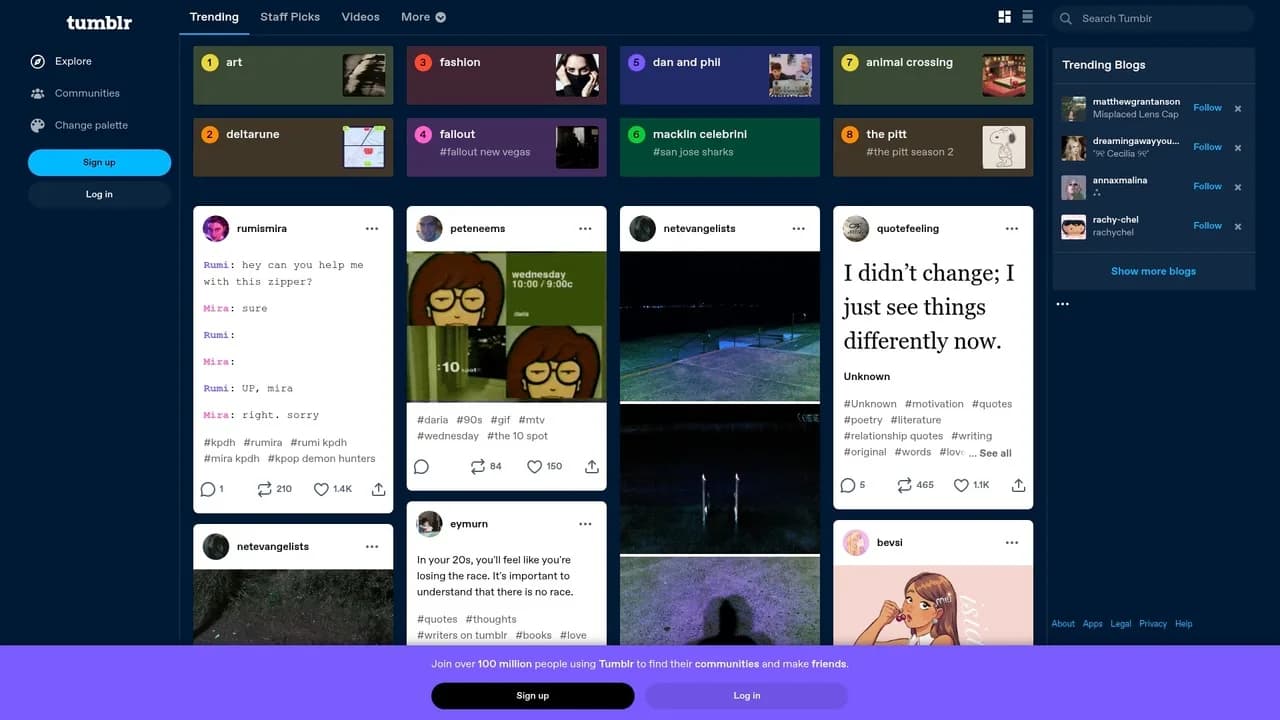
Tumblr dominates community-driven content sharing and micro-blogging
Tumblr dashboard with reblog and tagging features
Tumblr dominates community-driven content sharing and micro-blogging
Tumblr holds a unique position in the blogging ecosystem. According to Wix Blog, Tumblr has the biggest market share of the blogging industry in 2025, accounting for 72.27% of the overall blogging market with over 518 million blogs. This statistic reveals something interesting: Tumblr's dominance reflects its massive user base rather than mainstream recognition, as Tumblr serves highly engaged niche communities that other platforms don't reach.
The Tumblr philosophy emphasizes community, reblogging, and shared culture. Content spreads through the network as users reblog (share with commentary) posts, creating conversation threads that build community identity. For creators focused on visual content, GIFs, short-form writing, and fan communities, Tumblr's cultural ecosystem is unmatched.
Monetization on Tumblr is limited compared to other platforms—the platform doesn't offer native subscription or payment functionality. However, Tumblr creators build loyal, engaged audiences and often monetize through external channels like Patreon, merchandise, or direct community support. The platform's strength is community culture and authentic engagement rather than direct revenue.
Pros:
Largest blog market share and massive active user base
Community-driven culture and active engagement
Free blogging with reblog ecosystem for organic reach
Strong niche communities and fandoms
Visual content optimized and prioritized
Cons:
Minimal native monetization features
No subscription or payment functionality
Community-dependent reach (algorithm less fair than others)
Declining mainstream perception and user growth
SEO and organic search visibility minimal
Limited customization and professional branding
Best for: Niche community creators, visual artists, fan communities, and creators building engaged communities around shared interests rather than audiences seeking to maximize traffic.
Who Should Choose Which Platform?
The "best" blogging platform doesn't exist in the abstract—it's the best fit for your specific goals, technical skills, and business model. According to InBound Blogging, how-to articles are the most popular content format for blogs, preferred by 74% of bloggers, regardless of platform choice. The platform matters less than consistent, valuable content.
Choose WordPress.org if: You're building a long-term business around blogging, need maximum SEO control, want to own your data completely, or plan to create extensive content libraries requiring sophisticated organization.
Choose Medium if: You want audience discovery without building from zero, prefer writing over technical configuration, and aren't focused on search engine traffic or brand control.
Choose Substack if: You're building a subscriber-based business, prioritize email as your distribution channel, or want to monetize directly through reader payments.
Choose Wix or Squarespace if: You need an integrated website and blog, prioritize visual design, and prefer drag-and-drop simplicity over technical customization.
Choose Ghost if: You're a professional publisher with advanced audience management needs, plan to monetize through memberships or subscriptions, and want editorial sophistication.
Choose HubSpot if: You're a B2B company using inbound marketing and need blogging integrated with sales and marketing automation systems.
Choose Blogger if: You're a complete beginner wanting to start with zero investment and minimal technical knowledge.
Choose Tumblr if: You're creating for niche communities, prioritize visual or fan content, and want organic reach through reblog dynamics.
The Future of Blogging: AI Integration & Automation
The blogging landscape continues evolving, particularly with the rise of artificial intelligence tooling. According to InBound Blogging, 80% of bloggers now use artificial intelligence tools in 2025, up from just 5% in 2023. Most significantly, 66% use AI to generate ideas, indicating that AI has moved beyond writing assistance into core ideation and strategy.
This shift represents a fundamental change in blogging economics. Creating that average blog post of 1,333 words takes approximately 3.5 hours using traditional methods. With AI assisting in research, outlining, and drafting, the time investment decreases substantially while consistency increases.
Platforms like Upgrid are automating the entire blogging workflow—from keyword research identifying what your audience actually searches for, through AI article generation and optimization, to automated publication across your chosen platform (WordPress, Wix, Shopify, Webflow, and others). Rather than spending weeks creating monthly content, creators can generate 30 SEO-optimized articles monthly while maintaining full editorial control and brand voice.
This automation particularly impacts the economics of content marketing. According to Tech Business News, the content marketing industry is expected to grow by nearly $600 billion between 2023 and 2027. This growth is driving adoption of tools that compress the time and cost of content creation while improving quality and consistency.
For creators on any platform—WordPress, Medium, Substack, or others—the question increasingly isn't whether to use AI assistance but which approach yields better results for your specific goals. As you examine examples of successful blogs in your niche, you'll notice that consistency, depth, and frequency increasingly separate successful publications from stagnant ones. AI tooling enables this consistency at scale.
Why Real Examples Matter for Your Blog Strategy
Studying successful blog examples on different platforms provides practical insights beyond what platform comparisons alone offer. When you examine how leading publications structure content, organize archives, design for reader engagement, and maintain publishing consistency, you gain templates for your own blog development.
According to Bloggers Passion, 77% of internet users (4.08 billion people) read blogs, with 6 million blog posts published daily worldwide. This scale reveals both opportunity and competition. Your blog competes for attention against millions of daily posts, requiring distinction through expertise, consistency, and genuine value delivery.
The most successful blogs across all platforms share common characteristics: a clear point of view or niche expertise, consistent publishing schedule, genuine engagement with their audience, strategic keyword and topic planning, and often, integration with broader marketing or business goals. The specific platform matters less than these fundamental factors.
Frequently Asked Questions
What platform is best for growing an audience quickly?
Medium and Substack excel at audience discovery through their algorithm and recommendation systems. Medium's community engagement features and Substack's growing creator economy create natural pathways to growing audiences. However, "quickly" depends on content quality, niche, and publishing consistency. Expect 6-12 months of consistent publishing before significant growth on any platform.
Can I move my blog from one platform to another?
Yes, but with varying complexity. Moving from WordPress is typically easier (export all content and settings), while moving to some platforms like Medium can be one-way (Medium doesn't offer easy data export). Substack and Ghost preserve content more portably than Medium. Always research migration options before choosing a platform long-term.
Which platform is best for SEO and Google traffic?
WordPress.org, Ghost, and HubSpot offer superior SEO capabilities through customizable metadata, technical optimization, and plugin ecosystems. Medium and Substack rely on platform discovery over search engine traffic. For organic search, WordPress and Ghost are superior, but Ghost is premium-priced and WordPress requires technical setup.
What's the average time investment for running a successful blog?
According to Orbit Media, bloggers spend just under three and a half hours writing each article, with average post length reaching 1,333 words. Successful blogs typically publish 2-4 posts monthly, representing 6-14 hours of monthly writing investment. With AI assistance, this time reduces significantly.
Can I monetize a blog on all these platforms?
No. Native monetization options vary dramatically. WordPress enables AdSense, affiliate marketing, and product sales. Substack and Ghost offer native subscription models. Medium offers the Partner Program. Tumblr requires external monetization. Blogger supports AdSense. Wix and Squarespace support membership models with paid plans. Medium and Substack monetize more easily than others.
How do I choose between WordPress and a hosted platform like Wix or Squarespace?
Consider technical comfort, customization needs, and growth plans. WordPress offers maximum flexibility but requires hosting and maintenance knowledge. Wix and Squarespace eliminate technical concerns but limit customization. For blogs prioritizing SEO and long-term scalability, WordPress wins. For simplicity and design, Wix/Squarespace excel. For audience discovery, Medium/Substack are superior.
Is blogging still effective for business growth in 2025?
Absolutely. With 77% of internet users reading blogs and content marketing growing at $600 billion annually through 2027, blogging remains core to customer acquisition, authority building, and organic traffic generation. The differentiation is consistency and quality. Blogs publishing 2-4 valuable posts monthly outperform sporadic publishing by a wide margin.
What's the relationship between AI tools and blogging platforms?
AI tools are becoming essential to scaling blogging operations. 80% of bloggers now use AI in 2025, primarily for idea generation and drafting assistance. Platforms like Upgrid integrate keyword research, AI writing, and auto-publishing across WordPress, Wix, and other platforms, essentially automating the entire blogging workflow. This enables small teams to achieve publication frequency that previously required large editorial staffs.
Conclusion: Choosing Your Blogging Platform
The diversity of blogging platforms reflects the diversity of blogging purposes. Whether you're building a personal brand, growing a business, creating a publication, or building community, a platform exists optimized for your specific needs. The examples we've explored—WordPress, Medium, Substack, Wix, Squarespace, Ghost, HubSpot, Blogger, and Tumblr—represent the primary options available to creators in 2025.
Your platform choice matters, but choosing wrong is recoverable. Successful bloggers sometimes migrate platforms as needs evolve. Far more important than platform selection is committing to consistent, valuable content creation. Start where you're most comfortable, focus on writing great content, study successful examples in your niche, and iterate based on what your audience responds to.
As blogging tools continue evolving—with AI automation, improved analytics, and better audience monetization—your ability to sustain consistent publishing effort becomes more important than the specific platform. Ultimately, the best blogging platform is the one you'll actually use consistently over months and years.